

Seaweed aquaculture is a major part of China's coastal bioeconomy, yet farming space and seasonal windows are increasingly constrained in many established production areas.
To address this challenge, a research team led by Prof. PANG Shaojun from the Institute of Oceanology of the Chinese Academy of Sciences (IOCAS) has demonstrated that wakame (Undaria pinnatifida)—a kelp traditionally farmed in temperate waters—can be cultivated to market size in subtropical Fujian using clonal sporophyte seedlings and a winter grow-out strategy.
Their findings were published in Aquaculture Reports on Jan. 6.
In the pilot, wakame clonal seedlings were produced from male and female gametophyte strains of the nationally certified cultivar "Haibao No. 1", maintained at the CAS Seaweed Culture Collection Center. This clonal approach provides stable seedling quality and allows hatchery scheduling to match the subtropical winter grow-out window, supporting consistent offshore deployment.
During the winter cultivation period in Fujian, the clonal wakame grew rapidly and reached market-sized fronds—averaging about 1.9 meters by early March in the study. The team also tested farming practices and found that a cluster-based clipping approach delivered markedly higher biomass than an alternative method, highlighting a scalable operational option for industry.
Beyond growth, nutritional profiling indicated that subtropical-grown blades achieved commercial-grade quality, including higher protein content and enriched levels of key umami-associated amino acids reported in the study—supporting both feasibility and market relevance.
The researchers emphasize that Fujian's subtropical climate also limits ecological risk: summer seawater temperatures exceed critical thermal limits, meaning wakame (and kelp such as Saccharina japonica) cannot establish self-sustaining wild populations locally, reducing the likelihood of naturalization. The team nevertheless recommends strict harvest-and-removal management and continued monitoring as cultivation expands.
The pilot study provides field-based evidence that this approach is technically feasible and that the harvested product meets key requirements for commercialization.
"By linking clonal seedling supply with the subtropical winter window, we demonstrate a practical pathway to expand wakame cultivation into southern China," said Dr. LI Xiaodong, first author of the study. "Looking ahead, scaling up wakame farming in subtropical regions will require further optimization of the seedstock production calendar and the development of post-harvest processing capacity tailored to wakame products."
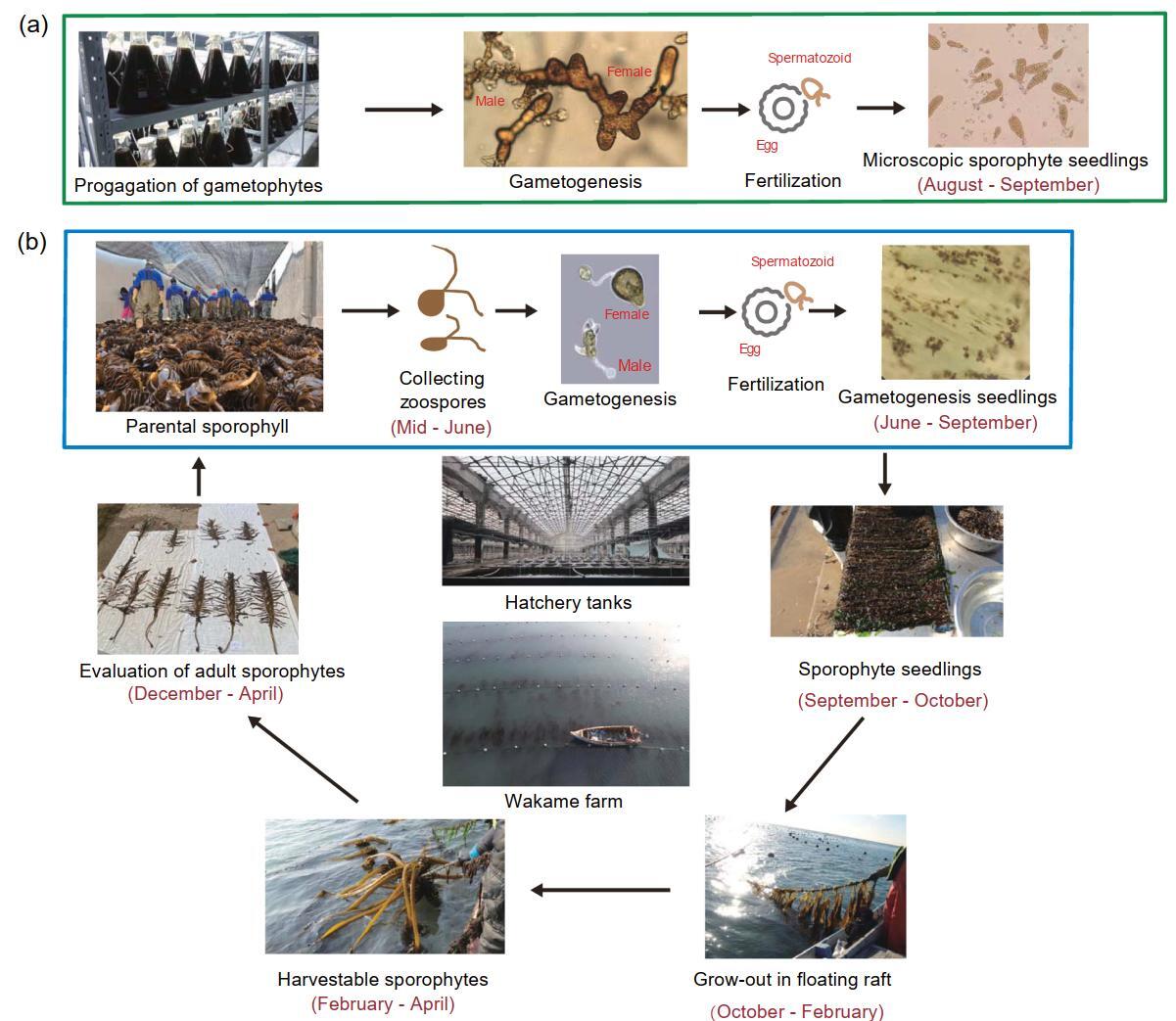
Fig. 1 Full stage-covered U. pinnatifida seeldings and cultivation production cycle in north China. (a) Clonal hybrid breeding; (b) Traditional commercial cultivation sporophyte breeding. (Image by IOCAS)
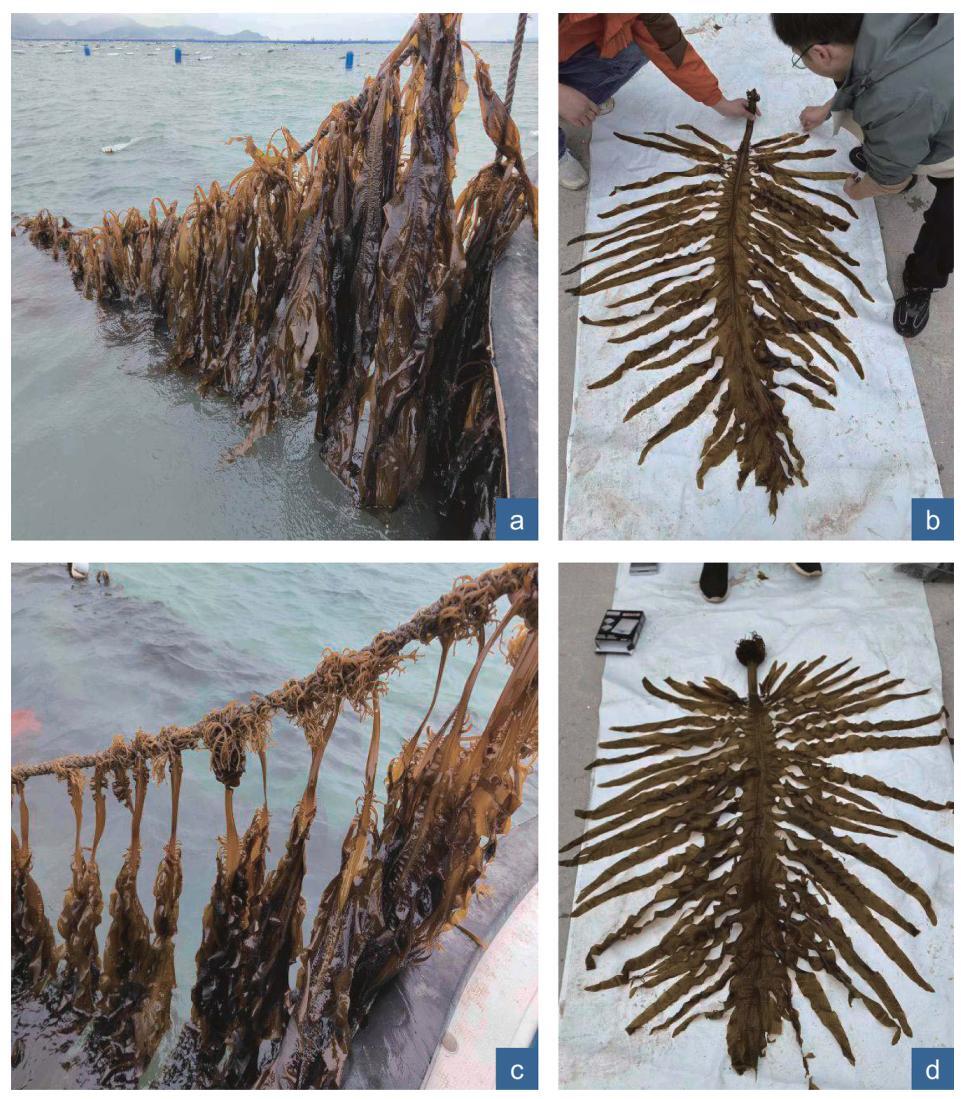
Fig. 2 U. pinnatifida under different farming methods in Fujian. a, b, cluster-clipping; c, d, individual-clipping. (Image by IOCAS)
(Text by LI Xiaodong)
Media Contact:
ZHANG Yiyi
Institute of Oceanology
E-mail: zhangyiyi@qdio.ac.cn
(Editor: ZHANG Yiyi)