

Held alongside the IEEE OCEANS 2026 Sanya Conference, an international workshop themed "Enhancing Coastal Resilience with Affordable Marine Tech and AI-Driven Networks" was co-initiated by MOSAIC, an international program led by Fan Wang, Director of the Institute of Oceanology, Chinese Academy of Sciences (IOCAS), and the SAGITTA project, with the aim of boosting global research collaboration and cross-border marine technology transfer.
The event was co-hosted by IOCAS, the Ocean Decade International Cooperation Center, and the State Key Laboratory of Physical Oceanography. Hui Zhou (IOCAS), Director of the POGO Western Pacific Regional Office, chaired the session. Experts from China, Italy, Bangladesh and Australia delivered keynote speeches on affordable ocean observation technologies, AI-driven observation networks, and marine capacity building in low- and middle-income countries.
The workshop aligns with the UN Ocean Decade and Science Decade goals, and the core mission of the MOSAIC project—to address climate-related ocean challenges through tailored observation systems and AI.
During the opening ceremony, Xiaofeng Li (IOCAS) delivered remarks on behalf of Fan Wang. Other distinguished speakers included Junchang Sui (Deputy Director of the Ocean Decade International Cooperation Center), Yan Liu (Deputy Director of the State Key Laboratory of Physical Oceanography), and Sophie Seeyave (CEO of POGO). They emphasized that cost-effective technologies are key to bridging observation gaps and enabling sustainable development for low- and middle-income nations.
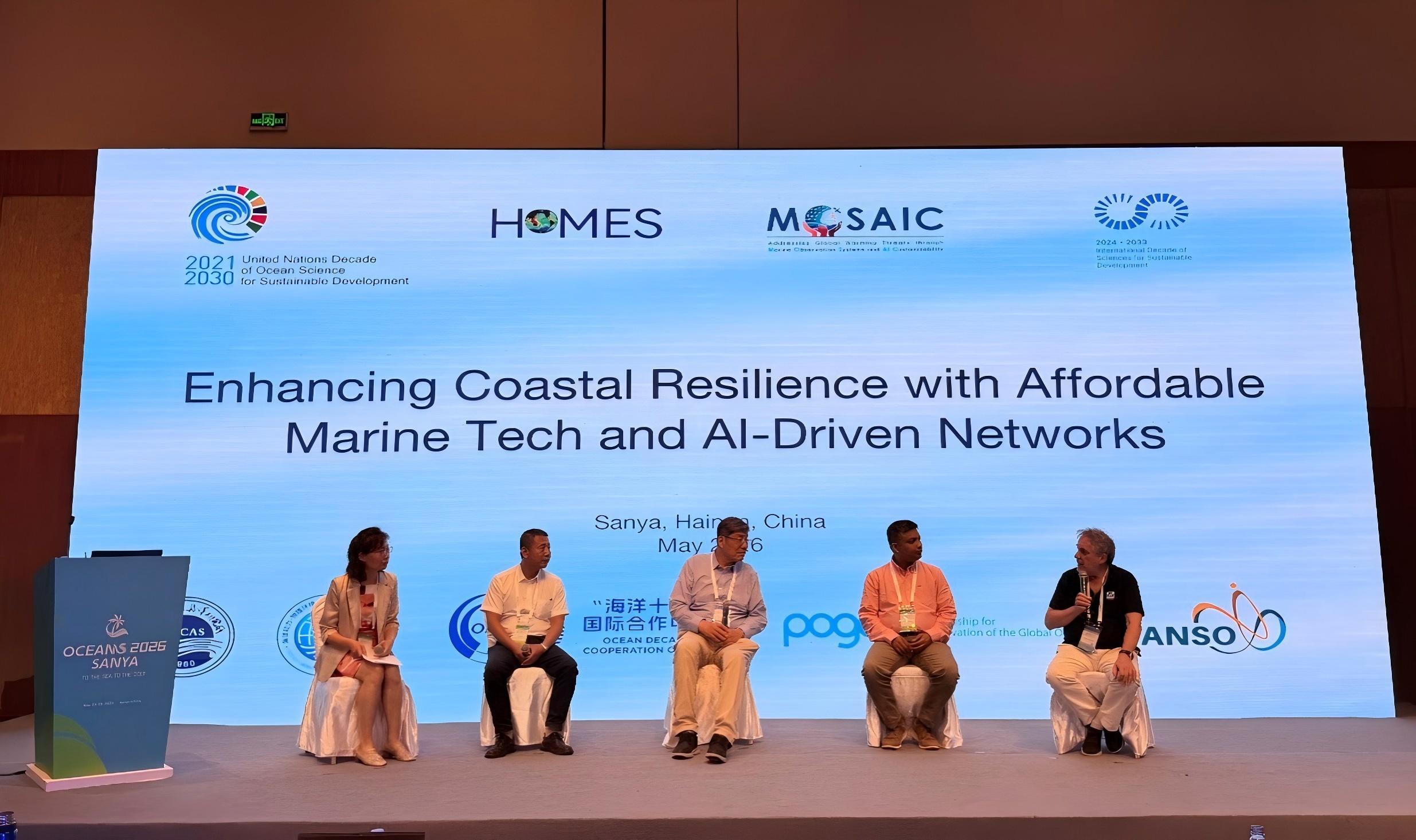
Roundtable Discussion
Keynote speeches spanned cutting-edge low-cost sensor innovations, AI-based marine forecast systems, coastal monitoring frameworks for underdeveloped coastal areas as well as the construction roadmap for the Indian Ocean observation network. Subsequent panel discussions zeroed in on two core topics: cost-effective marine equipment development and fostering independent indigenous technical capabilities within low- and middle-income countries.
Marco Marcelli from Italy's Tuscia University shared the latest breakthroughs in low-cost experimental oceanographic research. Zhang Changsheng, Deputy Director of SCSIO, CAS and head of the China‑Sri Lanka Joint Center for Education and Research, outlined key bilateral advances in coastal resilience, regional ocean observation and marine disaster mitigation, offering a replicable model for related cooperation among low‑ and middle‑income nations. Xiaofeng Li introduced AI algorithm frameworks designed to offset insufficient observational data in developing coastal regions. Subrata Sarker from Bangladesh's Shahjalal University of Science and Technology elaborated on practical obstacles restricting local marine instrument installation and application. Meanwhile, Yan Liu reviewed China's transformative development from heavy reliance on imported ocean devices to domestically manufactured cost-effective instrumentation, providing a referable development template for global peers.
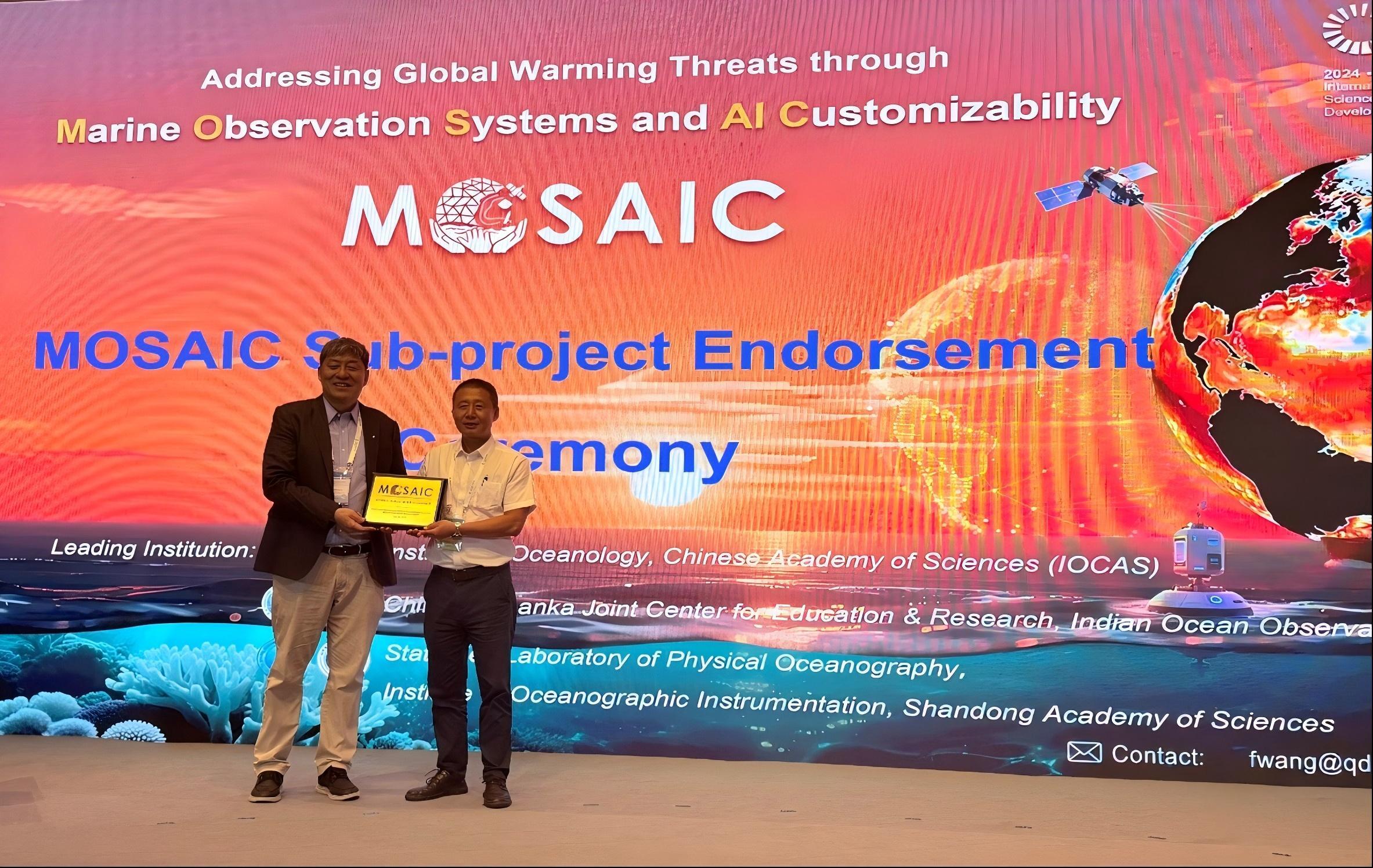
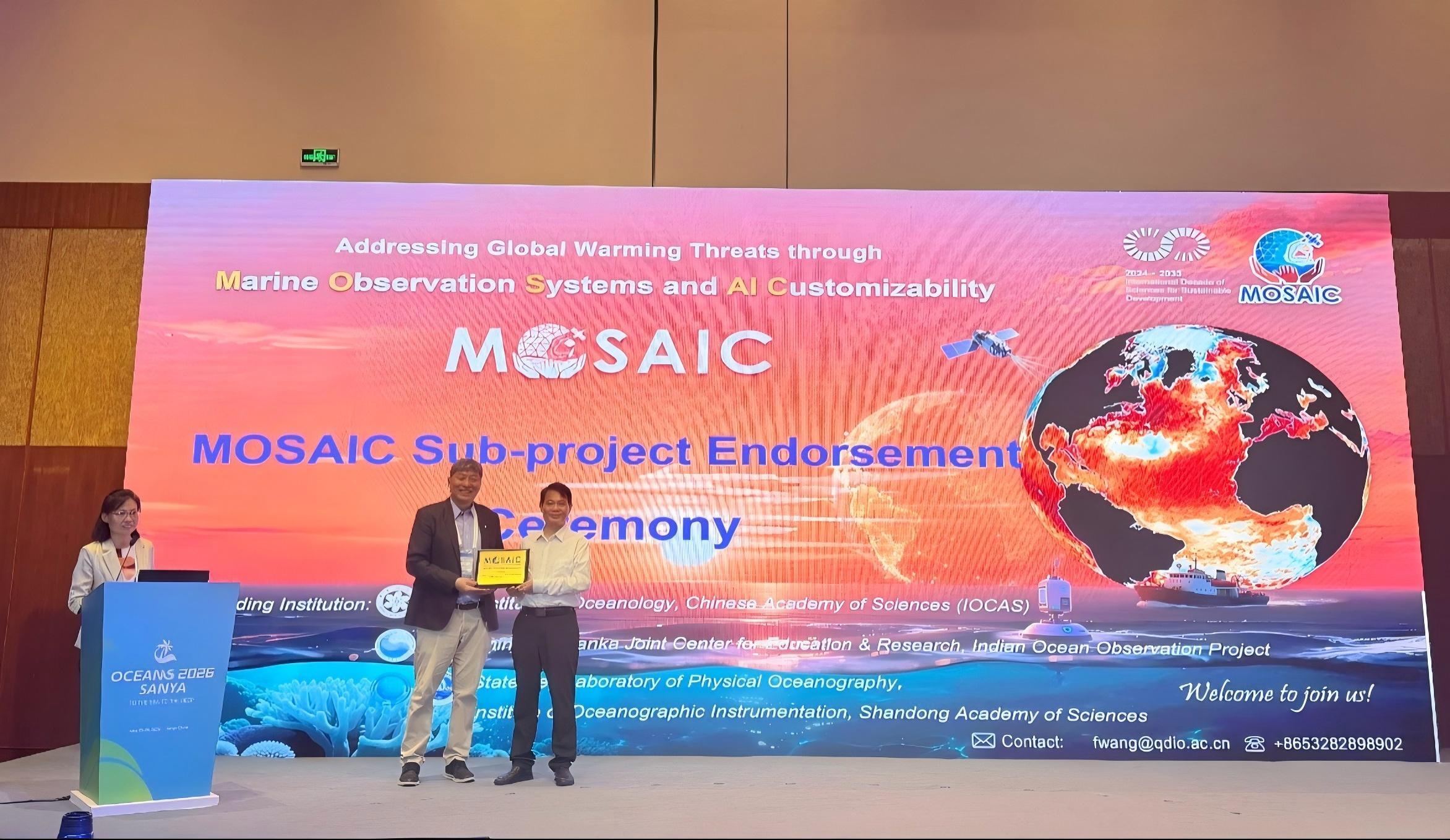
MOSAIC Sub-project Endorsement Ceremony
The workshop also witnessed the official inclusion of two sub‑projects in the MOSAIC initiative: the "Indian Ocean Observation Project" led by the China‑Sri Lanka Joint Center for Education and Research, and the "Ocean Sensor Project" of the State Key Laboratory of Physical Oceanography. These additions aim to accelerate affordable sensor development and boost regional coastal resilience against climate change and marine hazards.
By forging long-term international partnerships and rolling out AI-empowered ocean monitoring technologies, IOCAS continues to make steady progress in closing uneven global ocean data gaps.
The workshop underscored China's commitment to sharing marine technology and building a shared maritime future, injecting strong momentum into global coastal resilience and ocean sustainability.
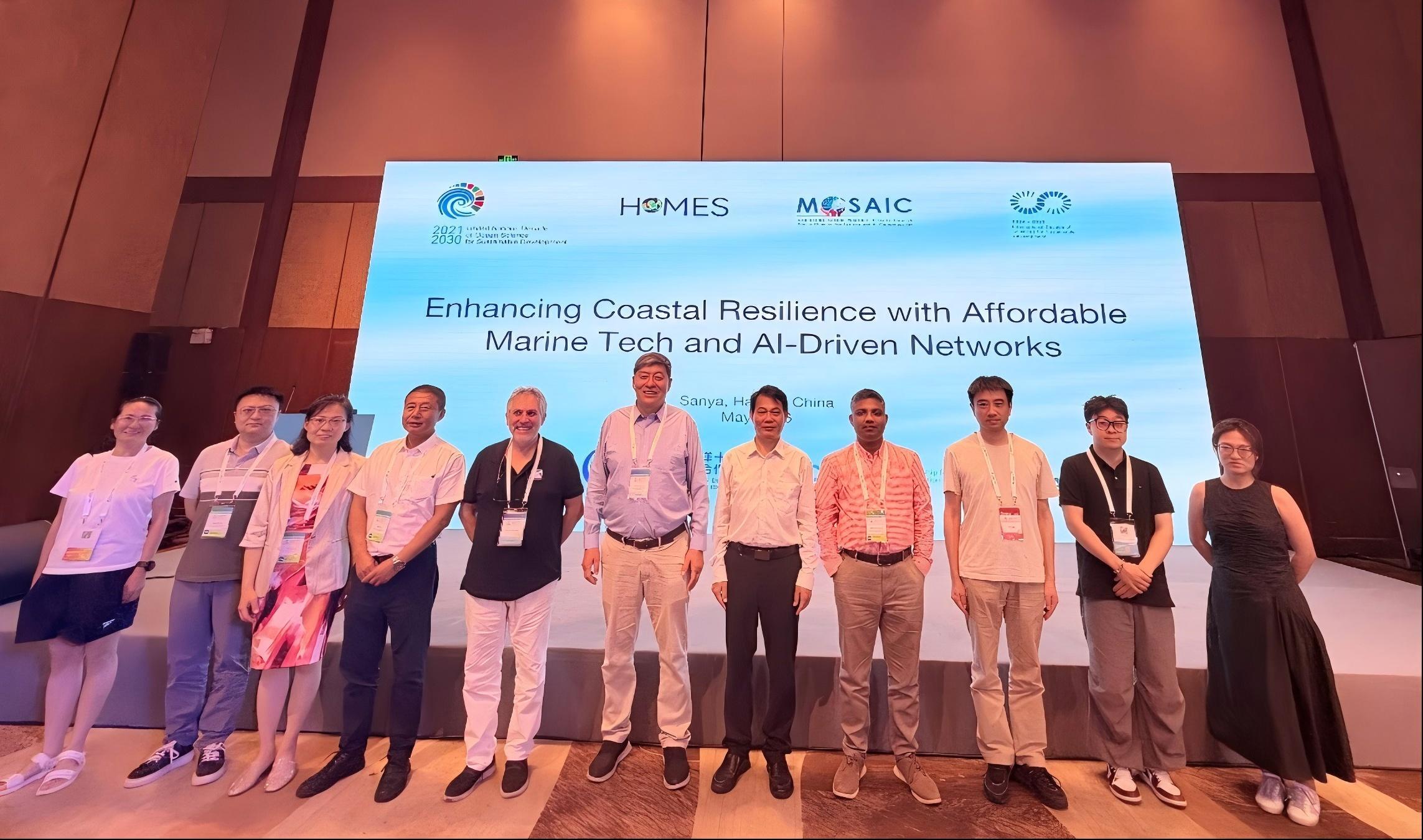
Group Photo
(Text by Dr. ZHOU Hui)
(Editor: ZHANG Yiyi)