

(Text by SHAN Tifeng, shantifeng@qdio.ac.cn)
In Chinese, the character 藻 (zǎo, meaning algae) originally refers to aquatic weeds. As algae often feature delicate patterns and charming hues, 藻 in classical Chinese is closely linked to beauty, literary grace and refinement — a cultured, elegant and positive character.
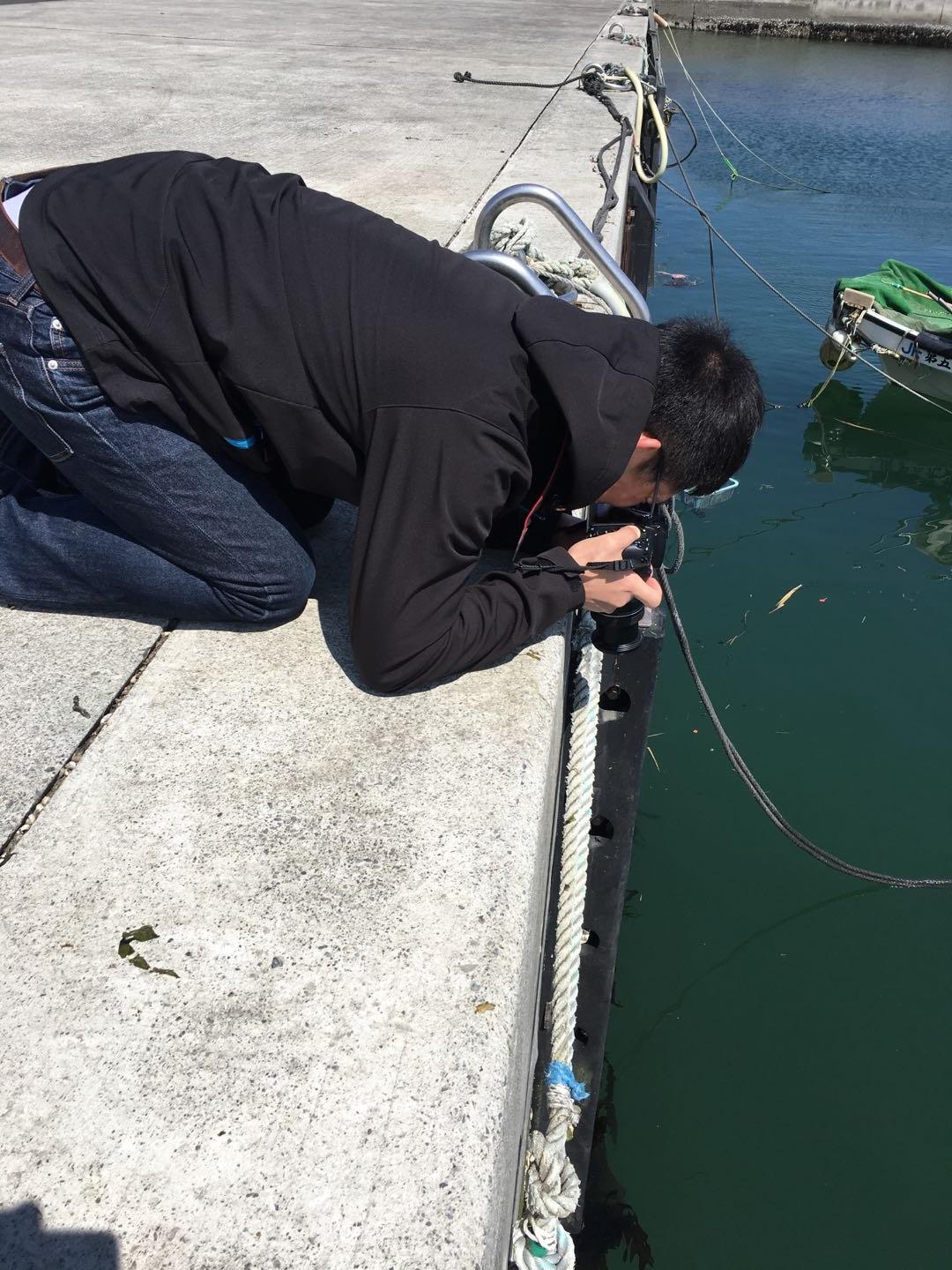
Tifeng was attracted by the underwater seaweeds and taking photos of them. Credit: Institute of Oceanology, Chinese Academy of Sciences
Algae form a mesmerizing world of vividly diverse species, among which seaweeds stand out. I have been captivated by seaweeds ever since my first encounter with them. Taxonomy of seaweeds has long intrigued me, and I hope to discover as many species as possible. Beyond their visual charm, seaweeds carry great economic and ecological value. They serve as food for humans, animal feed, and raw materials for the food, pharmaceutical and cosmetic industries. Ecologically, they also contribute greatly to carbon sequestration and seawater purification.
I joined the Institute of Oceanology of the Chinese Academy of Sciences (IOCAS) as a graduate student in 2004, and have since focused my research on kelp genetics and breeding. Kelps (order Laminariales) are a diverse group of brown seaweeds with great economic and ecological value, including Saccharina japonica and Undaria pinnatifida which are the two most economically important brown algae worldwide. In recent years, seawater warming driven by global warming has brought serious challenges to the seaweed cultivation industry: shortened cultivation cycles, retarded growth, premature senescence and reduced product quality. It is therefore urgent to develop high quality, widely adaptable kelp cultivars with tolerance to high temperature and other environmental stresses, to tackle the growing threats from global warming.
Kelps possess diverse reproductive strategies, encompassing sexual and asexual modes such as apomixis and apospory. One of my recent research focuses is kelp polyploid breeding leveraging apomictic and aposporous pathways. We have successfully generated diploid gametophytes with clear sexual phenotypes from apomictic sporophytes of Undaria pinnatifida, and produced dozens of triploid lines by crossing these diploid gametophytes with haploid gametophytes. Nine triploid lines exhibited superior economic traits compared with diploid controls. Moreover, five tetraploid sporophyte lines were acquired through selfing or parthenogenesis of diploid gametophytes.
My research underpins the establishment of a core polyploid breeding technical system for economically valuable kelps, paving the way for breeding triploid cultivars with excellent performance, stress tolerance and broad adaptability.
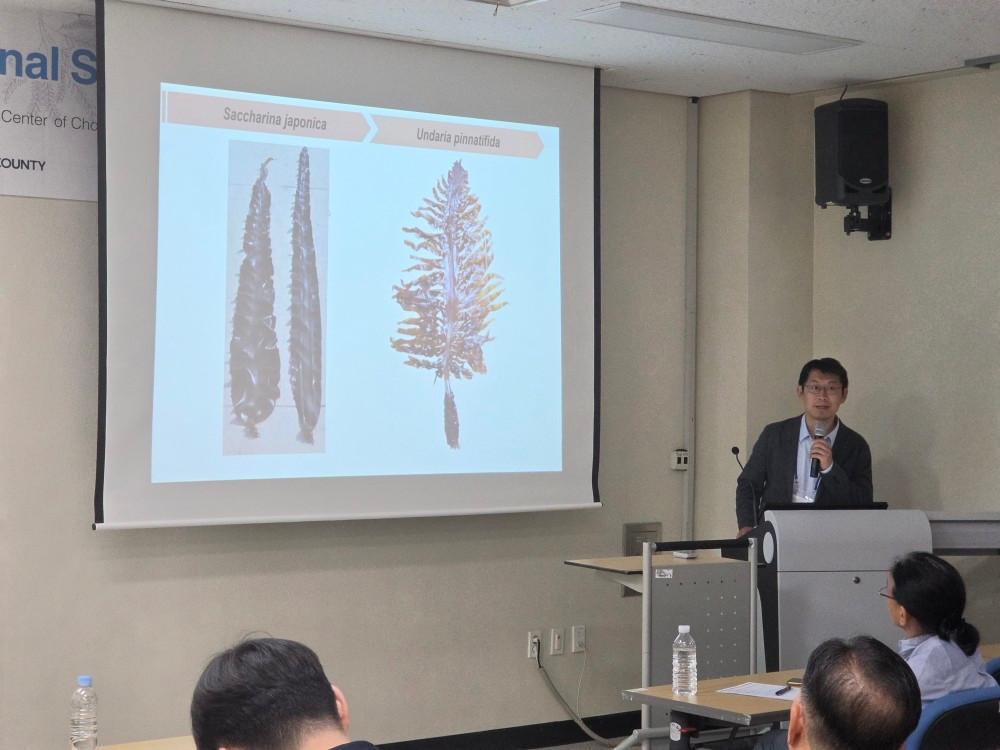
Tifeng was giving a talk on kelp polyploid breeding at an international seaweed symposium. Credit: Institute of Oceanology, Chinese Academy of Sciences
(Editor: ZHANG Yiyi)