What We Do
-
Probing Deep Earth via Seafloor Volcanic Rocks
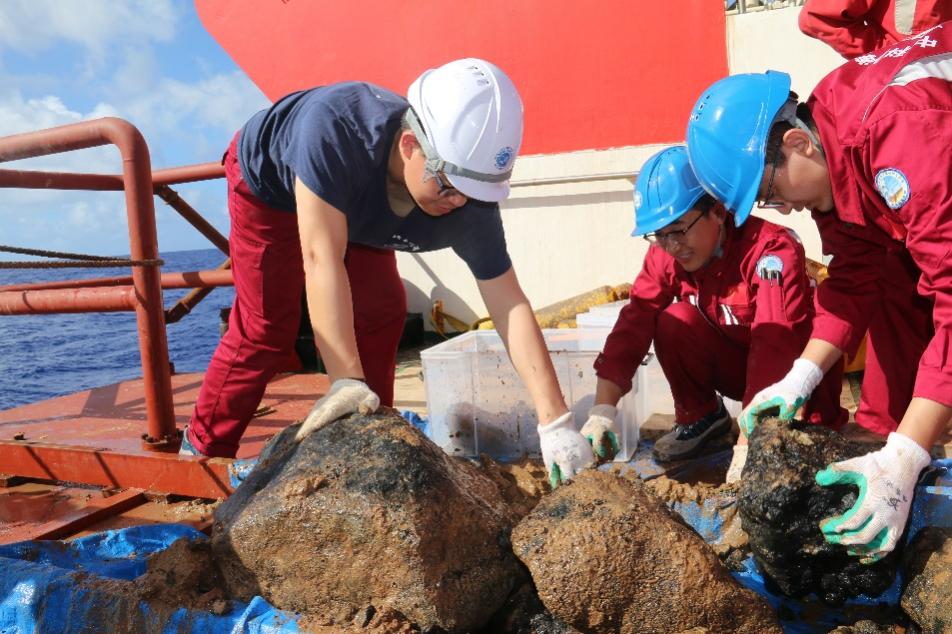
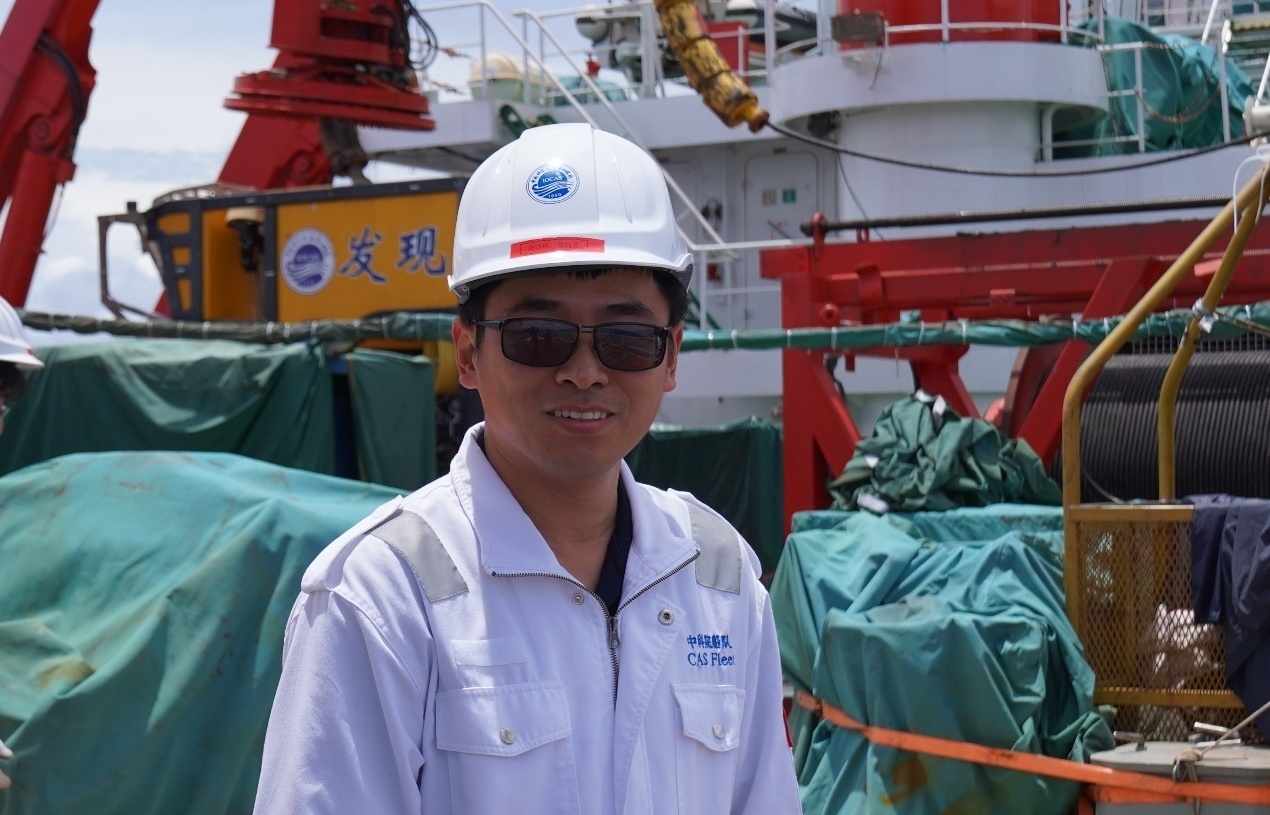
As an igneous petrologist and geochemist, I'm fascinated by the seafloor volcanism although it is covered by the global deep sea water.(Text by ZHANG Guoliang, zhangguoliang@qdio.ac.cn)
Guoliang was working on the ship of R/V Kexue located above the Caroline plateau in the western Pacific Ocean. Credit: Institute of Oceanology, Chinese Academy of Sciences
I'm fascinated by the ...
Feb 07, 2023
-
Shark Derived Single-Domain Antibody Generation
Every week I go to the seafood market to purchase fish, shrimp and squid, not for my family, but for the lab's dozens of sharks as their next week's food.(Text by BI Yunchen, yunchenbi@qdio.ac.cn)
Yunchen was operating shark experiment. Credit: Institute of Oceanology, Chinese Academy of Sciences
Every week I go to the seafood market to purchase fish, shrimp and squid, not for my family, but for ...
Jan 03, 2023
-
Diving Into the Subsurface Ocean to Understand Climate Change
My main goal is to identify and understand the long-term ocean subsurface temperature and salinity changes and link them to climate change and variability.(Text by LI Yuanlong, liyuanlong@qdio.ac.cn)
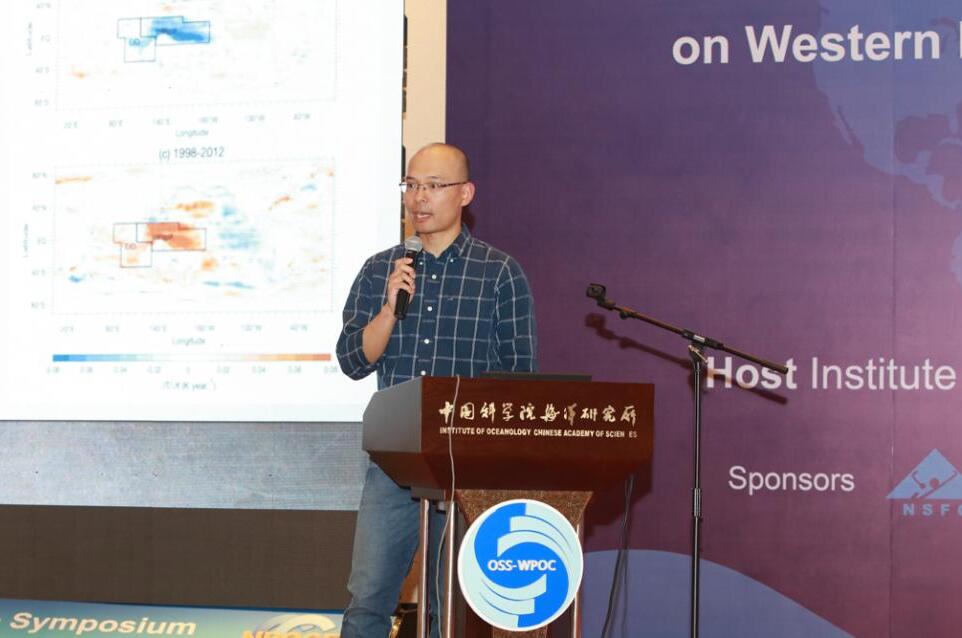
Yuanlong was giving a speech in an international workshop. Credit: Institute of Oceanology, Chinese Academy of Sciences
This photo was photographed on May 24, 2018. I was talking about the Indo-Pacifi...
Dec 02, 2022
-
CT for the Earth in the Ocean
What we're doing is a lot like medical CT, except we're doing CT for the Earth instead of the brain.(Text by DONG Dongdong, dongdongdong@qdio.ac.cn)
Dongdong was deploying the hydrophone streamer. Credit: Institute of Oceanology, Chinese Academy of Sciences
The Earth we live on is infinitely spectacular. Plateaus, mountains, rivers, grasslands...
Nov 16, 2022
-
Exploring the Role of Ocean Circulation in A Warming Climate
My team and I will continue to observe and study changes in the ocean in order to more accurately predict future climate changes and impacts in advance.(Text by HU Shijian, sjhu@qdio.ac.cn)
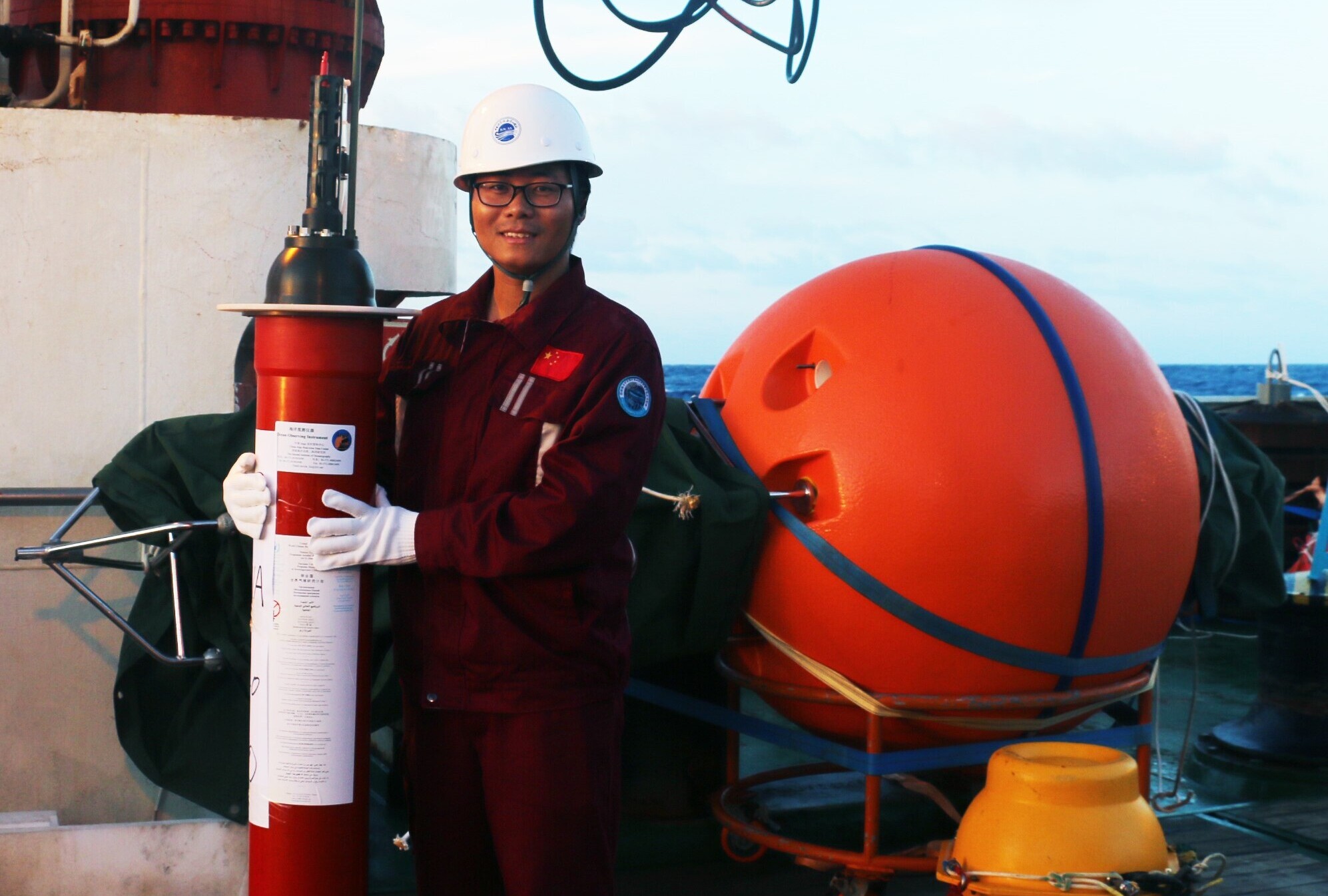
Shijian was getting ready to deploy an Argo float in the western Pacific Ocean. Behind him is a floating ball of a mooring equipped with ADCPs. Credit: Institute of Oceanology, Chinese Academy of Sciences
Th...
Nov 04, 2022
-
Biocorrosion and Bioleaching: Two Names for the Same Story
I wish to elucidate the key factors influencing interfacial process of bioleaching and biocorrosion.(Text by ZHANG Ruiyong, ruiyong.zhang@qdio.ac.cn)
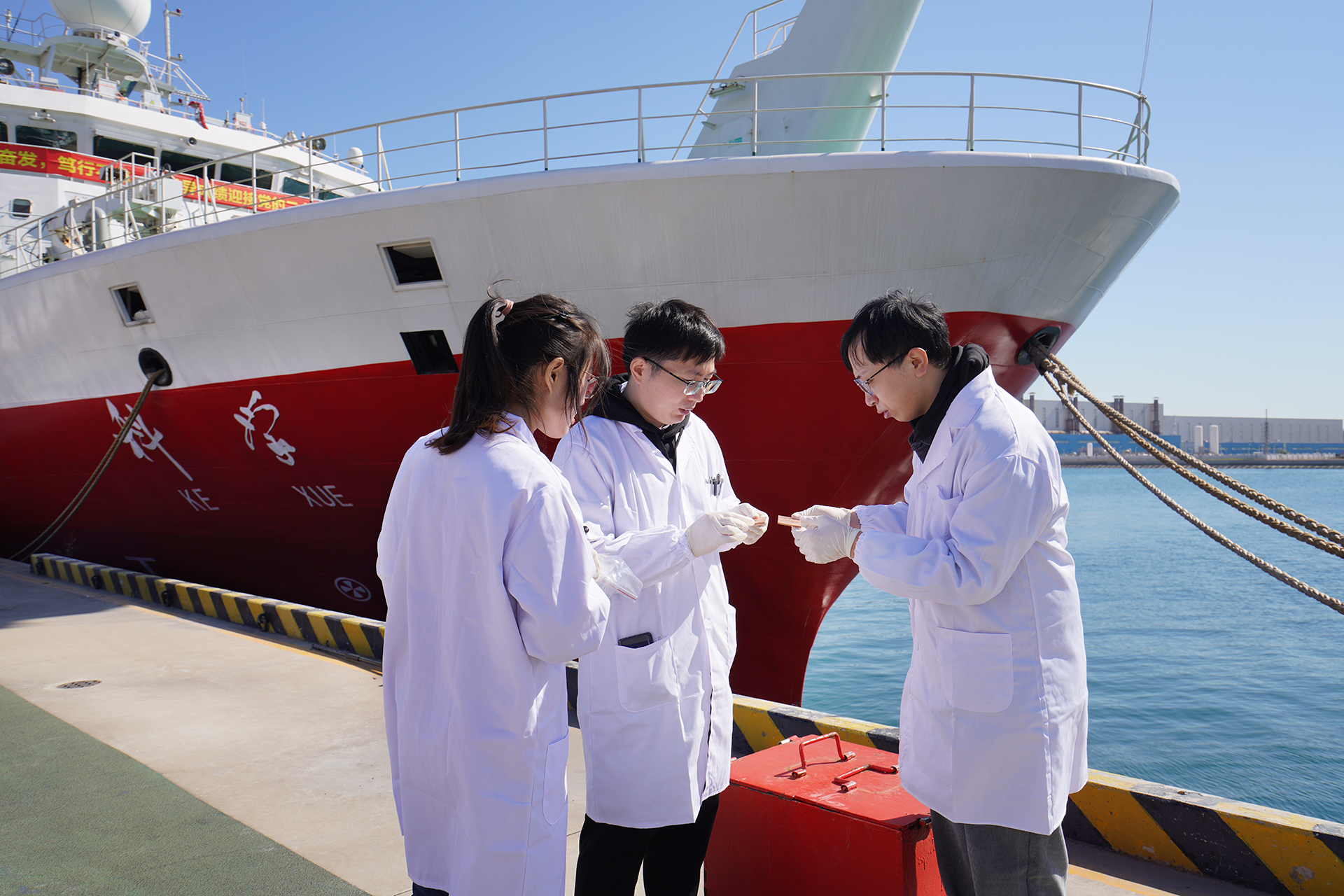
Ruiyong was discussing with colleagues about the preparation of metal samples used in in situ enrichment of corrosive microorganisms in marine (deep-sea) environments. Credit: Institute of Oceanology...
Oct 13, 2022
-
Becoming A Modern Marine Naturalist
I am a molluscan taxonomist, also called a malacologist. My dream is to become a modern marine naturalist, studying, exploring, and protecting marine life.(Text by ZHANG Junlong, zhangjl@qdio.ac.cn)
Junlong was participating in an expedition on board a research vessel. Credit: Institute of Oceanology, Chinese Academy of Sciences
When you walk along the beach, do you marvel at the colorful, varied,...
Oct 09, 2022
-
Let Abyssal Ocean Movements Be Seen and Predictable
Our new findings subvert the traditional view that the deep ocean circulation is in a state of calm, disorder, and a very slow variation.(Text by WANG Jianing, wjn@qdio.ac.cn)
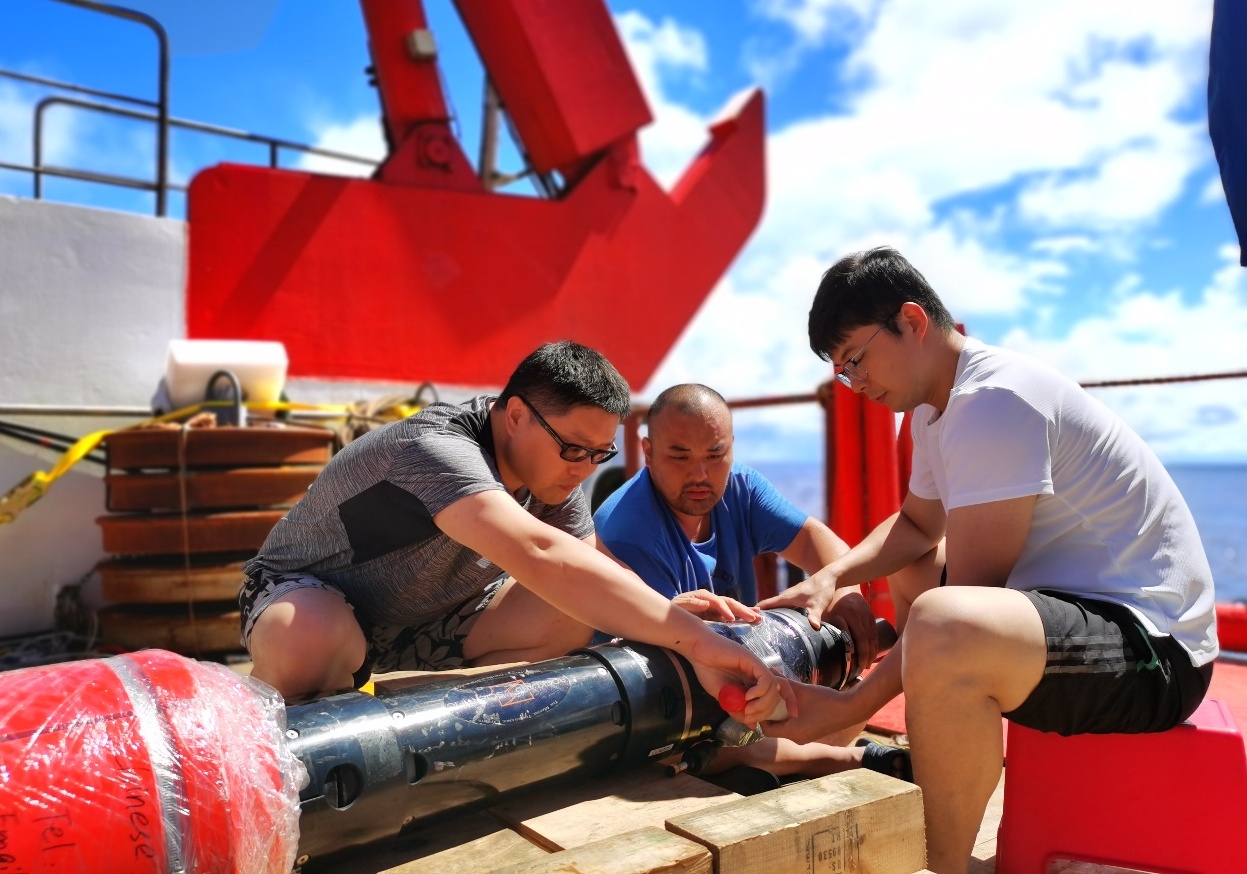
Jianing and his colleagues was preparing the deployment of the Vertical Microstructure Profiler at the afterdeck of RV "KeXue" in the western Pacific Ocean. Credit: Institute of Oceanology, Chinese Academy of S...
Oct 09, 2022